
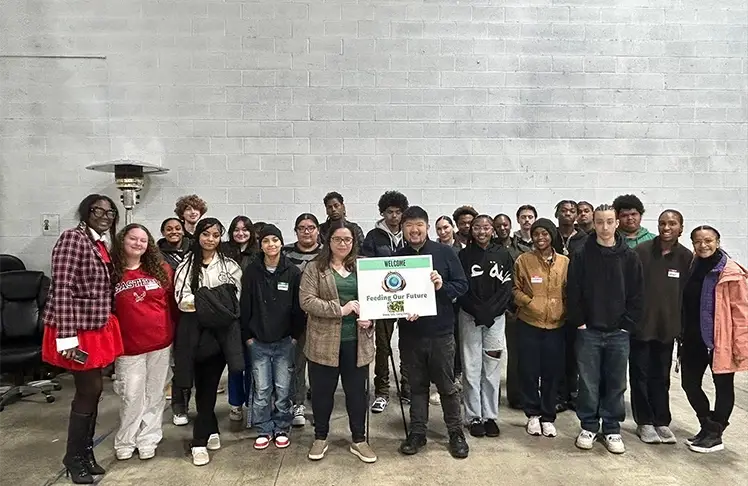
Ahndrea Blue, founder and CEO of MADF, left, pictured with Feeding Our Future participants. Courtesy Photo.
The Feeding Our Future program, an initiative of the Making A Difference Foundation (MADF) in Tacoma, Washington, continues to empower disadvantaged and at‑risk youth and young adults ages 16 to 25. On December 18, a group of determined participants marked a significant achievement when they graduated from Feeding Our Future’s third cohort. The graduation ceremony was held at Eastside Baptist Church in Tacoma and drew family members, mentors, and community partners to celebrate the accomplishments of the newest graduates.
The program, which combines paid, real world skill building with mentorship, helps its participants develop confidence, leadership, and practical business skills. Over the course of 20 weeks, cohort members engage in hands‑on learning, team projects, and community service that reinforce life skills alongside technical knowledge. The most recent graduating class demonstrated remarkable resilience by completing the rigorous schedule, gaining technical and entrepreneurial skills, and emerging with clearer goals and a stronger sense of purpose. The success of this cohort illustrates that when young people are supported with structure, meaningful work, and guidance, they can surpass expectations and build momentum toward their futures.
According to Ahndrea Blue, founder and CEO of MADF, the Feeding Our Future program was born from her early work with local youth who were trying to enter the marijuana industry. She noticed that many young people already had entrepreneurial instincts and technical abilities but lacked safe avenues to apply those skills in ways that offered long‑term opportunity and security.
“They were growing for purpose, as they were actually providing income to their families and to defend against need,” said Blue. “I came up with this program because I realized the same mechanisms they are using for marijuana can be transferred to something with higher profit and higher nutritional value, while helping to move their families to self sufficiency.”
Empowerment, self‑sufficiency, and community impact were central themes for the recent group. To align the curriculum with these goals, Ahmbur LeAnne, director of programs for MADF, designed sessions that encourage active participation, collaboration, and reflection. LeAnne said the program aims to help young people build not only job readiness, but also an emotional and social foundation to support success beyond the classroom.
“The program centers youth voices, connects learning to real outcomes, and consistently reinforces ownership, accountability, and community impact,” said LeAnne. “We encourage participants to take pride in what they are doing, to support one another, and to recognize how their growth contributes to the strength of the entire cohort.”
LeAnne explained that building a strong sense of community within each cohort is a deliberate part of the design. From the earliest weeks, participants work together to establish group expectations and norms. Peer leadership roles and regular group check‑ins are used to reinforce teamwork, trust, and mutual support.
“Using peer leadership roles, and building in consistent check ins and shared experiences, so that the youth feel seen, valued, and connected to one another,” said LeAnne. This community focus, she added, increases engagement, helps participants navigate challenges, and strengthens connections beyond the program.
The recent graduation marked a major milestone for the students, recognizing both their individual effort and collective growth. Throughout the program, LeAnne tracks multiple indicators to ensure participants remain on track and receive support where needed. These include attendance, engagement in learning activities, progression in skill development, observable behavior changes, and self‑reported confidence.
“I track attendance, engagement, skill progression, behavior growth, and self reported confidence to identify early support needs and to ensure that the students stay on track to graduate,” said LeAnne.
After graduation, the connection to support does not stop. LeAnne said the foundation offers follow‑up support to help graduates continue applying the skills they gained in areas such as leadership, hydroponics, and overall job readiness. This continued engagement helps graduates transition from the structured program environment into real‑world opportunities.
“I implement alumni check ins, continued access to mentors, job leads, and advanced workshops to help graduates apply their skills beyond the program,” said LeAnne. These ongoing resources provide pathways for continued professional development, networking, and personal growth long after the cohort ends.
Looking ahead, LeAnne shared ideas for enhancing the program and better serving future cohorts. She noted that introducing key components earlier, such as business planning and financial literacy, could help participants see even more immediate relevance in their work.
“I would introduce business planning and job readiness earlier on in the program, add regular reflection checkpoints, and strengthen financial literacy,” said LeAnne. “I would do these things so that the students can see relevance quickly and stay engaged through completion.”
Local employers are also an important part of reinforcing student engagement and demonstrating real‑world application. LeAnne said employer participation gives students exposure to workplace expectations and firsthand insights into career possibilities.
“Local employers serve as speakers, mentors, and pathway partners,” said LeAnne. “They offer site visits, mock interviews, and entry level opportunities that are aligned with workforce needs.” These partnerships help students understand employer expectations while building confidence and practical experience.
Preparing young people not only for jobs but also for leadership roles in their communities remains central to MADF’s mission. LeAnne said that communication skills, decision making, and confidence are all nurtured as part of everyday program culture.
“Preparing youth for leadership means building communication, decision making, and confidence, all while modeling integrity and responsibility in everyday program culture,” said LeAnne.
LeAnne believes that the cohort model is especially vital for today’s youth as they begin to enter the workforce. By combining paid skill building, structure, and a sense of belonging, the program fosters opportunities for participants that may not otherwise exist.
“MADF’s cohort model is vital because it combines paid skill building, structure, and belonging,” said LeAnne. “The program creates pathways to self sufficiency, leadership, and long term success for youth.”
For Blue, impact begins with belief. She said that having a single person who believes in you can make a profound difference in a young person’s life. Her goal, she said, is consistent whether the youth are family by blood or not.
“You can turn a whole kid’s life around just by believing in them. They are not perfect, I am not perfect, but having someone to believe in them and understand that life is unfair can help them succeed,” said Blue. “And now, 100 percent of them are no longer food insecure.”